We Advance the Wellbeing of Virginia
Virginia Cooperative Extension offers a comprehensive collection of resources, programs, and services that are research-proven, accessible, and contain actionable information that supports the success and resilience of individuals and communities throughout the Commonwealth of Virginia and beyond.
Upcoming Workshops & Events
Growing Greater Series
Growing Greater Blogs
"Growing the Next Generation of Ag Heroes" an initiative led by Virginia State University (VSU) Cooperative Extension.
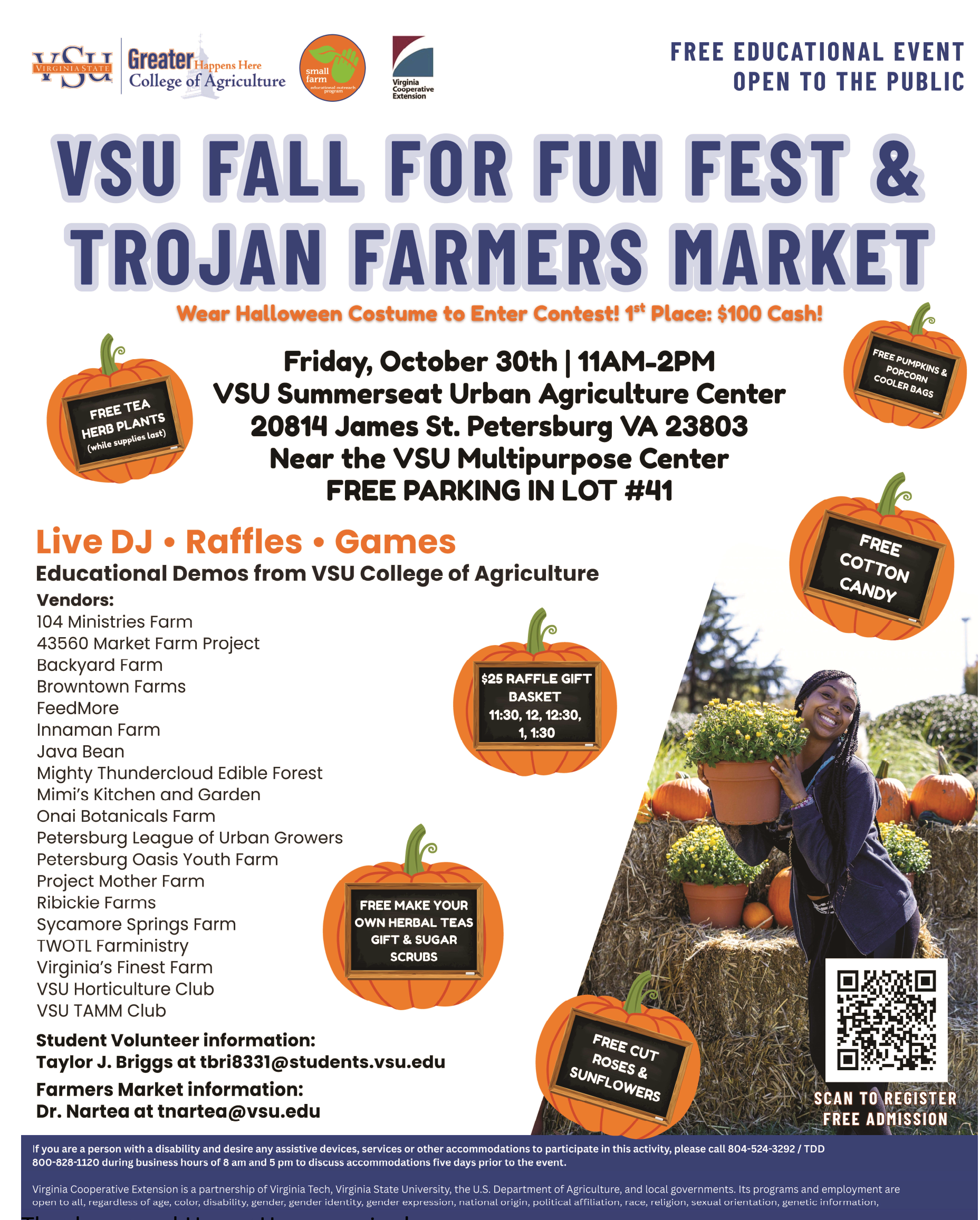
The Trojan Farmer’s Market kicked off the new school year with fresh produce, local vendors, and plenty of community spirit. Students and visitors came together to celebrate healthy living and support small farmers from across Virginia.
At VSU’s Agricultural Research Station, scientists explore how superfoods such as baby ginger may hold the key to fighting obesity and cancer.
Virginia State University celebrates 135 years of progress since the Second Morrill Act of 1890, which established HBCU Land-Grant institutions across the nation. This milestone honors a legacy of access, innovation, and resilience that continues to empower communities today.
Emergency readiness for extreme summer storms
In Virginia, summer can bring sudden, strong storms, as high humidity contributes to thunderstorms with strong winds and heavy rain. As Virginia enters peak storm season, it's important to be ready. You might be familiar with emergency preparedness, such as ensuring flashlights are fully charged in case of a power outage, storing a few days' worth of food and fresh water, or having plans to evacuate or seek shelter if the situation poses an immediate danger.
These are all critical components of emergency readiness, but there is one element some folks may not have considered: whether the trees on their property are storm-ready. Virginia State University's urban forestry specialist, Mr. Joel Koci, has tips to help homeowners protect trees and property from storm damage.
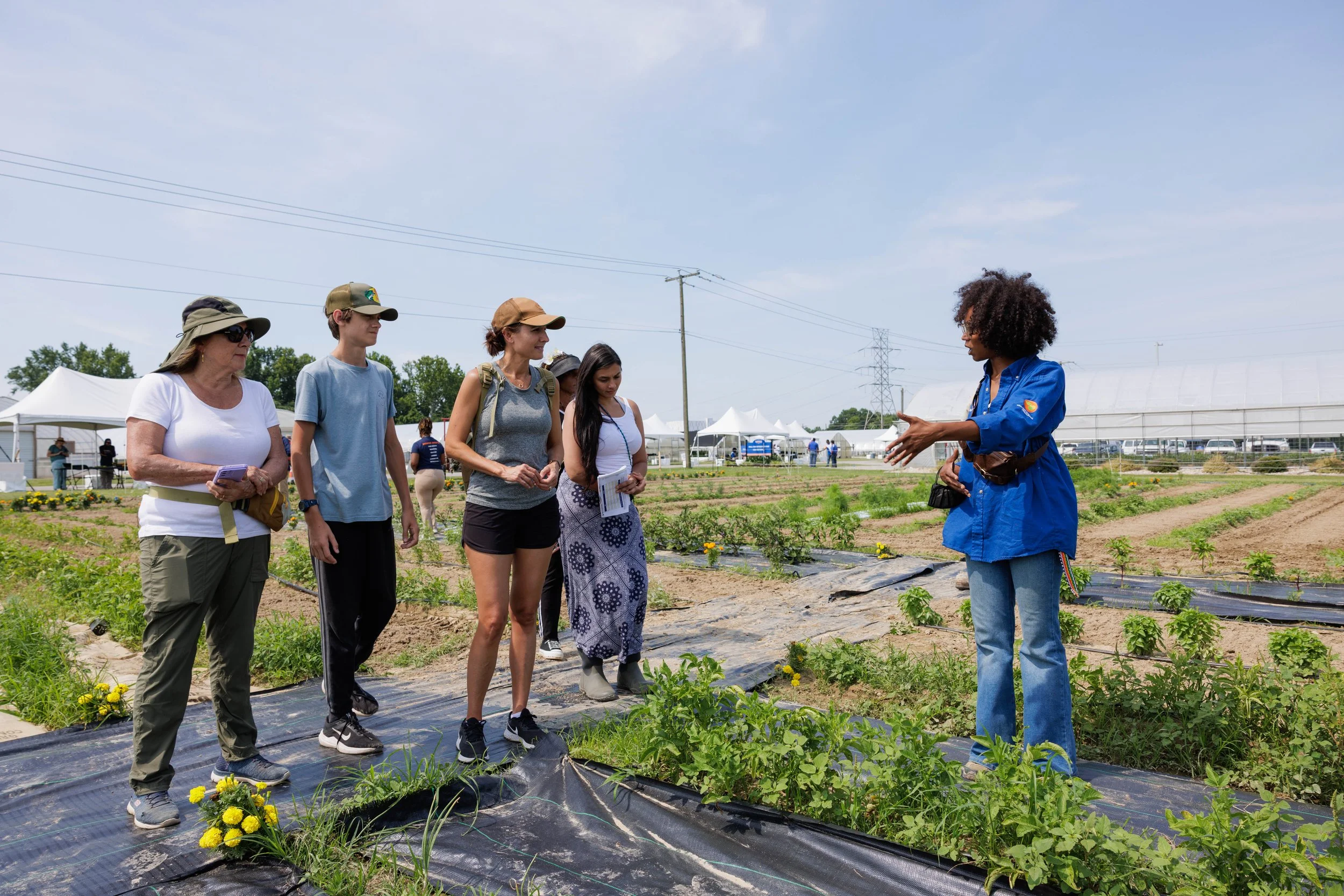
In late June, Virginia State University (VSU )'s College of Agriculture (COA) welcomed farmers to Randolph Farm for its Small Farmer-Focused Field Day, offering hands-on learning opportunities at the research and demonstration farm. The event gave growers the chance to see how crops and production systems perform under Virginia conditions and to speak with researchers and specialists who understand the current challenges facing Virginia growers and are working to solve them.
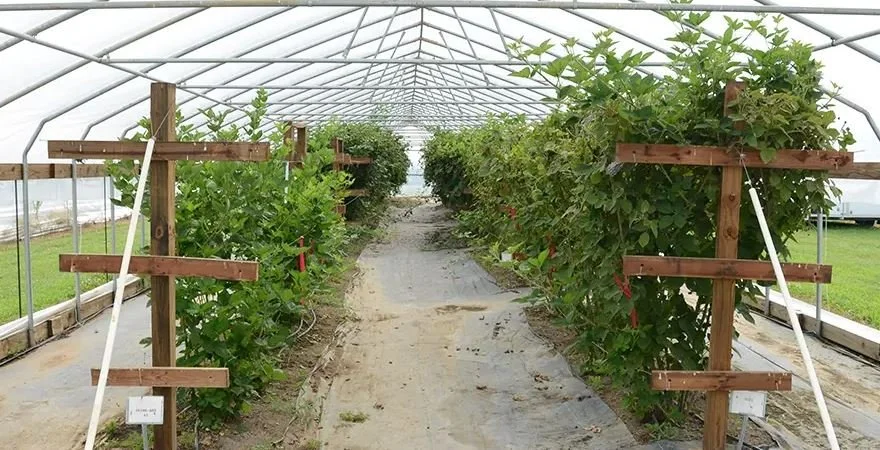
Almost 150 farmer participants visited research plots showcasing 27 blueberry cultivars grown in high tunnels, including the Northern Highbush, Southern Highbush, and Rabbiteye varieties, to compare plant performance and production potential and learn recommendations across Virginia's various USDA planting zones and soil conditions. In tours of other plots and high tunnels, visitors also learned practical organic tomato production techniques, including sustainable strategies for managing common foliar diseases that can negatively impact plant health and crop production.
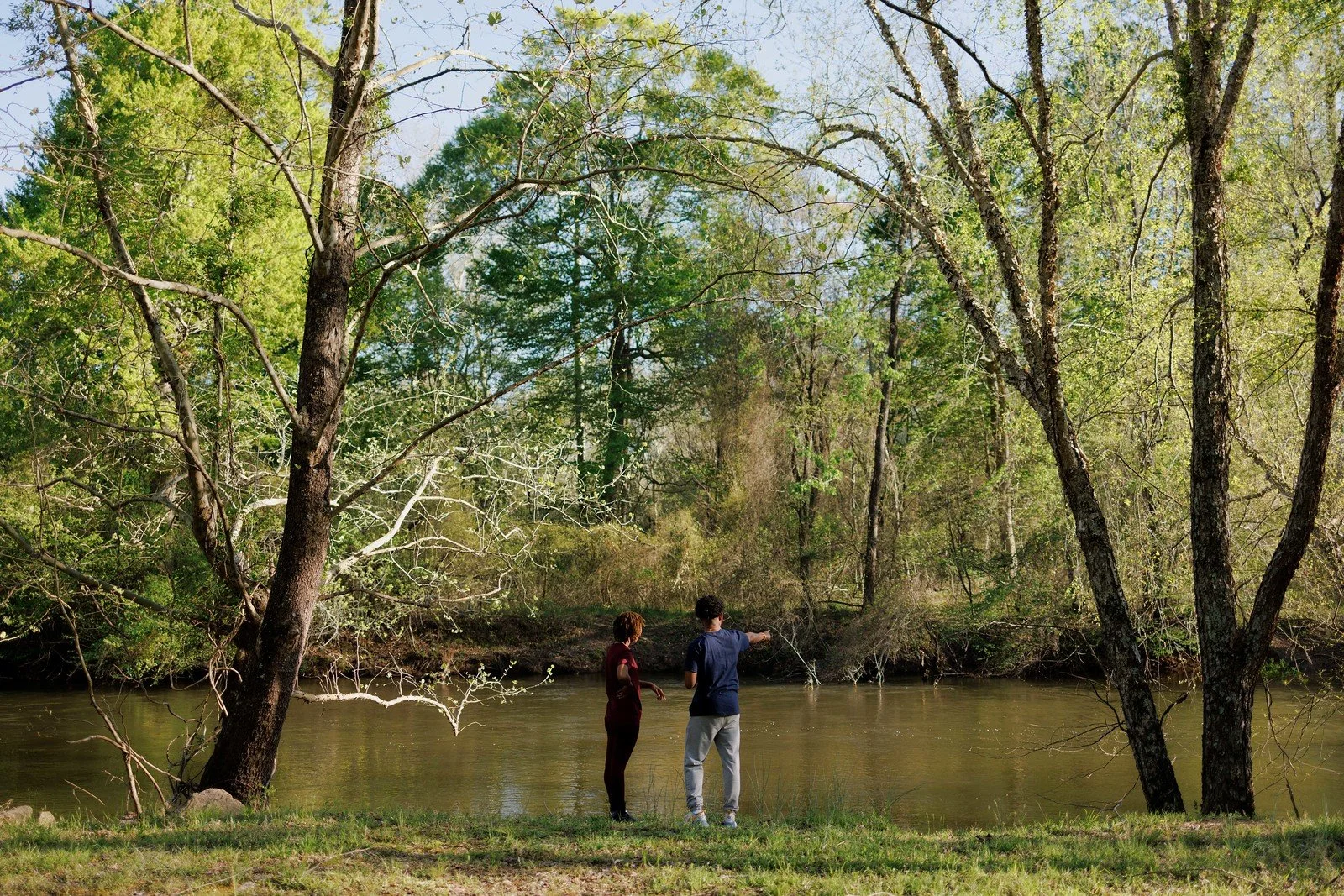
Large swaths of Virginia are a part of the Chesapeake Bay watershed. Rivers, streams and creeks of all sizes eventually flow into this unique estuary. The Chesapeake Bay is a vital economic resource for the region, with seafood industries, recreation opportunities and tourism generating significant revenue and job opportunities for states within the watershed. It's also a space where people, plants, and animals live in an interconnected system; where positive actions beget positive impacts across the system, and likewise for harmful actions, like pollution, which eventually flows into the bay. A healthy bay ecosystem protects our air and water quality, local food sources, and protects communities from flooding and erosion. Not to mention, thousands of species of plants and animals call the Chesapeake Bay watershed their home, just as people do. By protecting and increasing water resilience in Virginia, we protect our own communities. At Virginia State University, Extension specialists like urban and community forestry associate Joel Koci teach people how to protect and enhance water resilience in Virginia, thereby protecting their own communities.
One natural way to protect water quality is to bolster or plant a riparian buffer. A riparian buffer is the area next to a body of water where native trees, shrubs and other plants grow. Riparian buffers can be an important feature in agricultural, range, suburban and urban settings. Regardless of where you might find one, a riparian buffer's job is the same. They stabilize eroding banks, provide shelter and habitat, and filter harmful substances from the water body adjacent to the buffer.
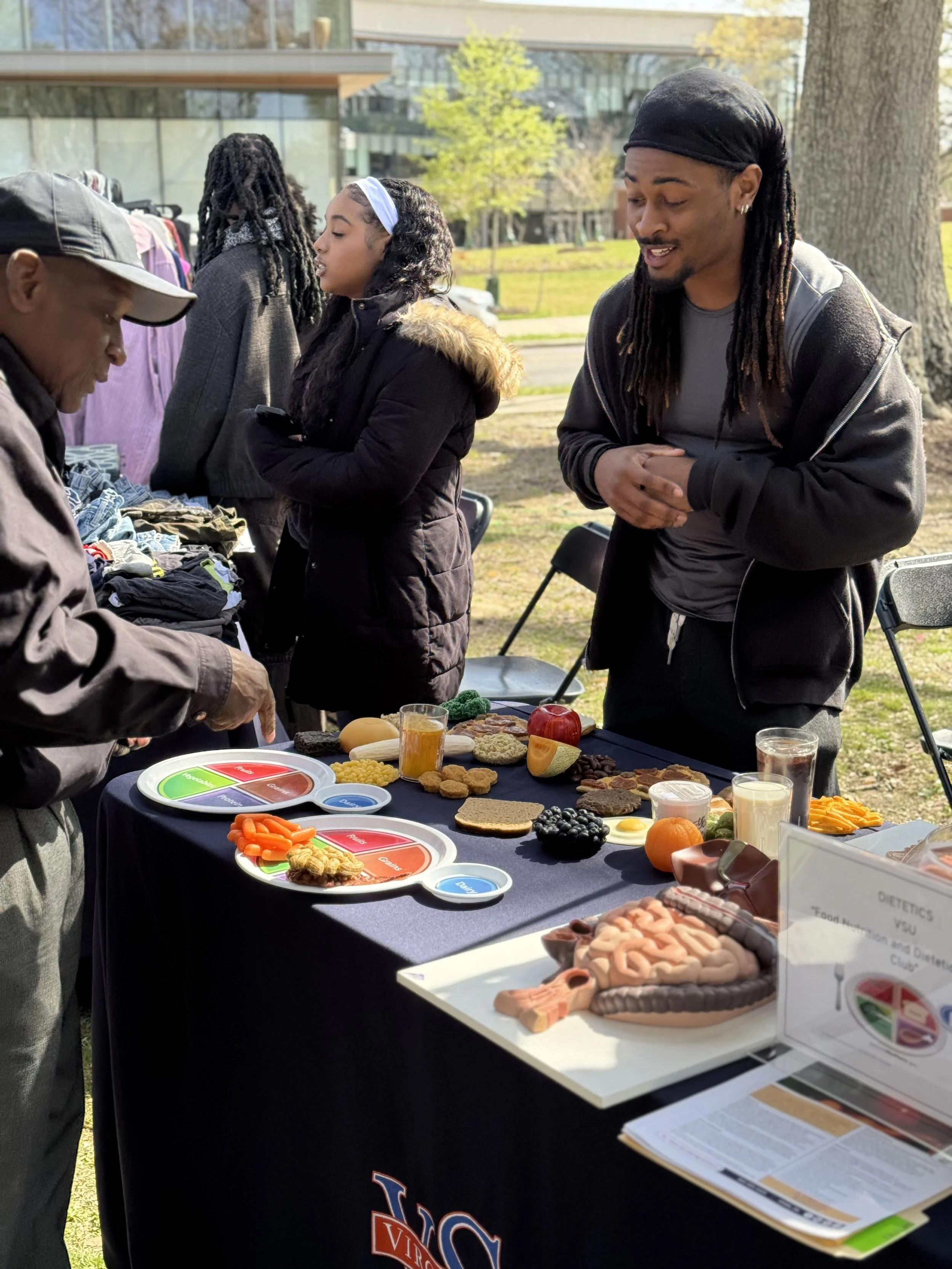
Virginia Cooperative Extension (VCE) at Virginia State University (VSU) is helping build healthier families and communities through nutrition education, food safety and youth wellness initiatives despite recent and real challenges facing Virginia families. Addison Caldwell is VSU’s Expanded Food & Nutrition Education Program Extension associate in the family nutrition program. Serving with Extension for nearly three years, Caldwell combines her background in dietetics and nutrition with a passion for empowering young people to make healthier choices.
Caldwell is a proud Trojan who earned her Bachelor’s degree in family and consumer sciences with a concentration in dietetics. With personal experience witnessing nutrition-related chronic diseases, Caldwell felt driven to pursue further education and a career in the nutrition field. She took a position with VSU Extension while completing her master’s degree in nutrition, and quickly started bringing nutrition and healthy lifestyle education into local communities through Extension programming.
The 1890 Association of Research Directors (ARD) Biennial Research Symposium in New Orleans showcased the very best of Virginia State University (VSU)’s College of Agriculture, with award-winning student research, innovation, and mentorship on display. From oral presentations to the AgTech Hack-a-thon and data competition, the VSU delegation proudly demonstrated the many ways in which Greater Grows here.
The college’s success at the ARD Symposium reflects a broad team effort of research, Extension, academics, leadership and administration. Preparations for the event were long in the making, and the team’s hard work shone through professional-looking posters, engaging displays and fine-tuned oral presentations. VSU’s interactive display featuring hologram messages from COA students and leaders, along with bold research priorities, generated significant buzz at the symposium. Faculty and students presented research orally, and, notably, two VSU students earned top honors for their posters and oral presentations.
4th Annual AgFest Highlights Innovation and Education in Virginia Agriculture
On Tuesday, March 24, Virginia State University’s College of Agriculture (COA) hosted its 4th Annual AgFest in honor of National Agriculture Day. This vibrant event brought together students, farmers, local businesses, families, and community members for a celebration of the many ways in which agriculture impacts all of us.
The festivities kicked off at 11:00 a.m. with an energetic drumline performance, followed by a steady flow of school groups and community visitors. Throughout the day, guests enjoyed live entertainment, student performances and a wide range of activities for all ages. As one of COA’s largest events of the year, AgFest showcased the many ways agriculture shapes everyday life. From the bustling Trojan Farmers Market, featuring local producers from across Virginia, to hands-on educational exhibits and farm-to-table food, the event offered ample opportunities for learning and engagement.
At Virginia State University (VSU), Extension is fortunate to have leaders who bring experience, heart and dedication to their jobs. To celebrate Women's History Month, we sat down with three women in leadership positions to learn more about their journey, who and what inspire them, and how they're rising to meet modern challenges as they advance the mission of Extension at VSU.
Reflecting on Extension’s Legacy of Impact in Virginia
Today, Cooperative Extension programs are woven into the fabric of Virginia communities. Through 4-H youth development, agricultural education, family and consumer sciences and community resource development, Extension connects research-based knowledge and solutions with individuals, families and communities across the Commonwealth. Virginia Cooperative Extension (VCE) at Virginia State University (VSU) continues to practice and expand a long tradition of outreach. Today, this work reflects more than a century of vision, persistence and leadership born from a need to dedicate resources to solve Virginians’ real-world problems.
Early Agriculture Education in Virginia
In the early 1800s, there were limited opportunities to learn and study agriculture, despite a growing need for workers with this practical knowledge. Educational opportunities that did exist were not open to all. The story of Extension in Virginia began with the first Morrill Land Grant Act of 1862, a piece of legislation that sold federal land to states for the clear purpose of establishing institutions focused on teaching agriculture and mechanical arts as well as classical and scientific studies. The goal was revolutionary for its time: to educate the working class and dedicate scholarly resources to solving pressing issues. In 1872, the Virginia Agricultural and Mechanical College, now known as Virginia Polytechnic Institute and State University, received funds from the Morrill Land Grant Act for its founding and would later become home to agricultural outreach and demonstration work.
Mr. Chris Mullins is a familiar and trusted face around Virginia Cooperative Extension (VCE). Many know him from his work as a Horticulture Extension Specialist at Virginia State University (VSU)’s Randolph Farm, while others know him from his extensive partnership engagement across the VCE system. With 26 years of experience in several roles in VSU’s College of Agriculture and VSU-CE, including most recently as Director of Randolph Farm, Mullins recently stepped into another new role. On December 5, 2025, he became Interim Associate Dean for Extension and VSU’s Extension Administrator, following the departure of Dr. Janine P. Woods, who accepted the role of Executive Director of County Cooperative Extension for the University of California, Agriculture and Natural Resources.
Mullins began his career at VSU in 1999, where he gained experience teaching academic classes, conducting research and delivering Extension programming; work that become central to his career. As a specialist in indoor agricultural systems and vegetable gardening, he frequently gave workshops on hydroponics and aquaponics systems to growers and hobbyists. His expertise and approachable style led many participants to return for more workshops and to seek his advice on their operations. Over time, Mullins assumed new responsibilities in leadership roles, including serving as VSU’s Extension Program Leader for Food, Ag Systems & Agroforestry. In 2023, he stepped into another key leadership role as Director of Randolph Farm, continuing his long-standing commitment to applied research, education and outreach.
On Monday, January 19, over 530 volunteers came together at Virginia State University (VSU)’s Multipurpose Center for the AgriMeals for Change meal packaging event. Virginia Cooperative Extension at VSU partnered with The Outreach Program. This non-profit connects individuals and organizations with volunteer opportunities to address access to food, clean water, education and medical care in their communities, to host the event. Together, they set a goal of packaging 50,000 nutritious boxed meal kits to bolster local food banks, including VSU’s campus food bank.
VSU’s Community Resource Development Extension Associate, Ms. Novita Epps, and School and Community Garden Extension Associate, Mr. Kristoff Minus, organized the community-focused volunteer event, with Mr. Chad Topper of The Outreach Program. Topper was an outstanding collaborator for the event, and drove all the way from Wichita, Kansas with the supplies and food to make the occasion possible. “In Virginia, where one in eight people face food insecurity, every box of packaged meals helps fight hunger, reduce food waste and restore dignity to families in need,” says Epps. “Volunteers who package food for donations are packing more than meals; we are packaging and delivering hope.” Epps and Minus initially sought 200 volunteers to work one of two shifts setting up for the event, at one of 20 stations to pack ingredients and meal components, to serve as a team captain or help clean up at the event’s conclusion. Over double that number of volunteers braved the cold to show up ready to serve, representing community members, students and faculty decked in Trojan orange and blue, plus local partners and organizations